
Feature
Hard to plead, harder to prove: misfeasance in public office after Palmer and Tsakirios

By Mr Tam McLaughlin
In July, Australian appellate courts delivered two judgments on the tort of misfeasance in public office within eight days of each other. The first brought an end to proceedings that failed at the pleading stage. The second is a significant Australian appellate statement on the tort, and it deserves attention in its own right.
The first was Palmer v Shipton [2026] FCAFC 90. Clive Palmer and his company sued the former chair of ASIC, James Shipton, over ASIC’s handling of a complaint Mr Palmer sent him in September 2019. ASIC’s response, they alleged, was the product of an investigation that was deficient, dishonest, or never happened. The Full Federal Court described the pleadings as “little more than houses of cards”. The only objective facts pleaded were that Mr Shipton was the chairman, that he received the letter of complaint, and that ASIC replied. The allegations of malice, dishonesty and knowing excess of power rested on inference drawn from further inference. After three attempts at pleading, summary dismissal was upheld, with costs.
Palmer restates principles of continuing practical importance. Misfeasance is a tort of personal liability, meaning the case must be made out against the individual officer’s own conduct and state of mind, although an employer, including the State, can be vicariously liable for it. It cannot be established by aggregating the acts and knowledge of an agency’s officers and attributing them to its most senior officer. The conduct of the officer personally must be identified with precision, and pleading that a defendant “caused and/or supervised and/or directed” something is evasive. Bad faith must rest on pleaded primary facts, and a pleading cannot be maintained in the hope that discovery will supply a case.
The second judgment is Tsakirios v State of New South Wales [2026] NSWCA 132. Mr Tsakirios was charged with robbery by Detective Senior Constable Allan. The DPP withdrew the charge eight months later, after material about other persons of interest, never disclosed to the DPP, emerged through a contested subpoena. He sued the State, and by the time the matter reached the Court of Appeal only the misfeasance claim remained.
Kirk JA wrote the principal judgment, Bell CJ agreeing and Leeming JA agreeing in separate reasons. The Court held that the disclosure duty in s 15A of the Director of Public Prosecutions Act 1986 (NSW) is a public duty in the sense relevant to the tort. It moderates the exercise of public power by police officers performing their statutory functions under the Police Act 1990 (NSW), and the primary judge was wrong to conclude otherwise. The Court went further and held that DSC Allan breached that duty. Her non-disclosure of the persons of interest material was an omission to exercise public power in order to comply with it.
The claim nevertheless failed on the mental element. The Court was not persuaded it was implausible that DSC Allan genuinely acted on her own conclusion as to the relevance of the material, rather than out of a determination to see the appellant prosecuted and convicted at all costs. Absent the requisite state of mind, the tort was not made out.
The importance of Tsakirios lies in Kirk JA’s restatement of the tort, which confirms that a failure to act can be enough, and that a claimant need not show the duty was owed to them personally, departing from authority that had stood for half a century.
The tort’s practical significance is in any event larger than its record of judicial verdicts suggests. The most consequential invocation of misfeasance in recent memory never reached judgment. After the Royal Commission into the Robodebt scheme found that senior officials had pressed on with the scheme despite warnings of its unlawfulness, the earlier class action settlement was challenged on appeal, with misfeasance in public office at the centre of the claim on the basis of the officials’ asserted reckless indifference. The Commonwealth resolved the appeal by a further settlement of $548.5 million rather than defend those allegations at trial, taking total Robodebt redress beyond $2.4 billion, the largest class action settlement in Australian history. No court determined whether the tort was made out. The tort’s force is most often felt in settlement rather than verdict, which is why authoritative appellate statements of its content are valuable.
The decision leaves the tort in an altered state. The mental element remains the effective gatekeeper, and Tsakirios confirms how demanding it is. A plaintiff who establishes a public officer, a public duty and a proven breach will still fail without proof of targeted malice, or of knowledge of, or reckless indifference to, both invalidity and probable harm. At the same time, the Court’s refusal to follow the earlier authorities removes a long-standing threshold requirement, and creates a divergence between the New South Wales and Victorian intermediate appellate courts that only the High Court can resolve. Whether in Tsakirios itself or in a later case, the boundaries of the tort may now fall for consideration by the High Court.
Welcome to the July edition of View from the Hill – our regular newsletter containing information and insights regarding legal and investigative issues concerning fraud, corruption, and professional misconduct.
In the news
Domestic

Duxton Hill's Tam McLaughlin joins in call for Big Build royal commission
Duxton Hill Partner Tam McLaughlin was among a group of former anti-corruption and organised crime investigators whose views were sought regarding calls for a royal commission into the Big Build corruption scandal. The article, published in The Age, was written by Nick McKenzie, one of Australia’s most decorated investigative journalists.
The Big Build corruption scandal has become entangled in a leadership contest within Allan’s own party, with factional leaders reportedly resolving on Sunday 26 July to move against her. Allan is expected to counter growing support for a royal commission — including from Deputy Premier Ben Carroll, seen as her most likely replacement — by proposing a dedicated, in-house organised-crime-fighting entity to cabinet on Monday 27 July, seen by critics as a watered-down alternative to bodies like the NSW Crime Commission and the Australian Criminal Intelligence Commission.
Phillip Bradley, who for two decades headed the NSW commission and was also the inaugural chief executive of the ACIC, argued a truly independent, public royal commission is the only way to properly expose corruption infiltrating Victoria’s $109 billion infrastructure pipeline, informing the public and referring findings for prosecution. McLaughlin echoed this, noting that while an in-house unit could investigate in secret, only public royal commission-style hearings can deliver the “public cleansing” needed to expose how organised crime infiltrated union and contractor relationships on the Big Build.
Note: Duxton Hill and Tam McLaughlin have no affiliation with McLaughlin Criminal Law, a separate and unrelated legal firm.

Banks Could Access Tax Info to Combat Loan Fraud
Some of Australia’s major banks and the Australian Banking Association are in conversation with the ATO to develop a new strategy to combat AI-assisted fraud in loan applications. Banks are currently investigating their exposure as loan applicants increasingly use sophisticated consumer-available AI tools to create fraudulent pay slips and tax returns. Fraud in home loan applications has risen to an estimated value of $4 billion across Australia’s five biggest lenders. The ABA says that Banks should be able to access ATO data to verify information about an applicant’s income, which would strengthen the integrity of lending and protect the banks against AI-powered fraud. But presently the Taxation Administration Act prevents the ATO from sharing protected data with the banks. The ATO is in an ‘exploratory phase’ to determine how best to approach verification of loan applicant details: mechanisms for data sharing exist but regulators would need to be satisfied that adequate controls are in place.
Consumer Action Law Centre on the Scam Prevention Framework
The Australian Government’s Scam Prevention Framework (SPF) aims to reduce the substantial losses suffered by Australians each year to scams (more than $2.2 billion was lost last year to scams). Despite tough talk and big promises, the Consumer Action Law Centre (CALC) says the scope of proposals now offered by the Government prevents the SPF from offering anything beyond basic protection for Australians. CALC says that proposals must be genuinely courageous, ambitious and clear – and provide tangible industry codes and cross-sector rules that are enforceable and effective.
CALC has called on the Government to set strong, prescriptive, outcome focused codes that clearly define expectations and exceed current practice to prevent scams. They suggest that victims of scams should be entitled to automatic reimbursement so complex dispute processes do not obstruct small-value claims, and propose the establishment of a fair, transparent and effective multi-party complaint process accessible to consumers. CALC also called on the government to expand the SPF to other high-risk areas including superannuation and dating sites where scams are widespread.

Trainee Surgeon Pleads Guilty to Secretly Filming Hospital Bathrooms
Ryan Cho, a trainee surgeon, pleaded guilty earlier this month to installing hidden cameras in hospital bathrooms and secretly filming hundreds of people using the toilets and showers at three major Melbourne hospitals – the Austin Hospital, Royal Melbourne Hospital and the Peter Mac Cancer Centre. Cho produced thousands of non-consensual intimate images and videos of hundreds of victims. Cho pleaded guilty to 13 charges including stalking, producing an intimate image and installing an optical surveillance device. Cho’s victims will have an opportunity to face him at a 3-day pre-sentence hearing in November, where the court will consider the impact of his offending on victims as well as his alleged serious psychiatric and psychological issues.

Scamwatch: Beware of Online Pokies & Casino Games
The Australian Government’s Scamwatch service has issued an alert for ‘scambling,’ a new kind of scam where scammers use illegal online pokies and casino-style games to entice their victims and steal money and personal information. The games are promoted on social media, messaging apps and referrals. They often have a legitimate appearance and advertise positive reviews and big payouts.
Scammers use the strategy of allowing small wins to initially be cashed out, legitimising the platform and giving victims a false sense of security. This entices victims to make large transfers into game currency or credits which the platforms will not allow victims to withdraw. Red flags to look out for include:
- Promotions of ‘casino-style’ online gambling
- Requests to buy game currency or credits using PayID or by transferring money to bank accounts or crypto wallets
- Rewards for referrals
- Requirements to deposit further funds to access winnings
- Customer support is vague, unresponsive or withdrawn.
If you suspect you have been the victim of a scam, stop sending money immediately. Contact your bank, change your passwords and login details and seek legal advice. Be aware of follow-up scams including offers to ‘unlock’ or access your money for further fees.
Top Dollar for Top Clearance: Costs for security vetting skyrocket
Every financial year, the Australian Government Security Vetting Agency’s pricing regime is updated reflecting the changing costs of various vetting services. This year, the cost to employers to have their employees vetted for mid- and high-level security clearances has skyrocketed, with some increases of up to 50% on the previous year. The changes will primarily affect government agencies and departments whose employees work with secret information, as well as independent specialist contractors and agencies who provide audit, workplace investigation and computer forensics services to government.
The rising costs of vetting are not expected to cause much consternation. They are still comparable or lower than costs in similar and allied jurisdictions; and the 2011 scandal in which outsourced vetting led to serious compromises in national security still looms large in the memories of those making decisions in this area. It seems this is the price well-paid for peace of mind when it comes to national security.
SPC Globals Sues Former Chairman
SPC, a major fruit and vegetable processor, is suing its former Chairman Hussein Rifai over allegations he misappropriated company finances to fund a lavish lifestyle of luxury travel and personal indulgences. SPC, which recently acquired a dairy business and took over the Original Juice Co to become an ASX-listed goods heavyweight, alleges that Rifai breached director’s duties and unjustly enriched himself and a company he controls, Thor Capital. Rifai has denied suggestions of wrongdoing, asserting that impugned expenses were always reimbursed if they fell outside company policy.

Private Prosecutions a ‘Threat to Democracy’ says Hepburn Shire Mayor
Tony Clark, mayor of the Hepburn Shire in central Victoria, has been forced to step aside after he became the subject of a private prosecution. The charges were brought by a local businessman David Penman who has also used the private prosecution mechanism to force two other Hepburn Shire officials to step aside. Mr Penman has threatened a suite of private prosecutions to remove the entire council. Mr Penman’s primary complaint against the councillors revolves around an allegation that a Council budget was adopted without the inclusion of some relevant financial documents. Mr Clark said that forcing councillors out of their roles through private prosecutions, rather than prosecutorial authority or integrity agencies, is inappropriate and provides an opportunity for people to attack duly elected officials without any real foundation. Mr Clark stepped down from council per requirements in the Local Government Act 2020 but will defend the charges. The Victorian Government is set to address the automatic stand-down ‘loophole’ with amendments to the Act.

Does it add up? Police targeting suspicious wealth
Victoria Police have launched a new community campaign around the slogan ‘Does it add up?’ encouraging people to report the suspicious acquisition of wealth by acquaintances and neighbours. Those living lavishly beyond their means are suspects in the eyes of Police, whose new crackdown targets those profiting from a life of crime. The campaign has so far seen the seizure of more than $100 million in luxury goods including watches, sportscars and designer handbags. The Confiscation Amendment (Unexplained Wealth) Act 2024 allows Police to recover goods and assets worth more than $200,000 when a person has no legitimate explanation for how they were legally obtained – enabling the recovery of $107 million last financial year. Victoria Police say community information assists their enquiries into suspicious wealth.
In the news
International

UK: Major changes for corporate criminal liability
Reforms to the Crime & Policing Act 2026 (UK) have reshaped the landscape of corporate criminal responsibility. Where previously corporations were only liable for the criminal wrongdoing of Board-level employees, now corporations are liable where ‘senior managers’ commit crimes in the ‘actual or apparent scope of their authority.’ A senior manager is someone who plays a significant role in making decisions about how the activities of the corporation are managed or organised, or who plays a significant role in managing or organising those activities. This is a much broader scope than previously contemplated and means that corporations will need to consider their liability when errant employees are accused of committing offences – particularly financial crime, data protection, competition law and supply chain offences (particularly relevant given the expanded scope of responsibility in UK law for modern slavery in supply chains).

Council of Europe Raises World Cup Concerns
The Council of Europe, which represents 46 nations, has penned an open letter to its formal working partner FIFA highlighting concerns over integrity and political influence. The Council’s Secretary General wrote that ‘money and power’ has driven FIFA into crisis which is likely to affect not just the conduct of football tournaments but the entire political and economic behemoth that is international football. The letter comes after the sensational decision to overturn the red-card suspension of American player Folarin Balogun after US President Donald Trump personally intervened with FIFA boss Gianni Infantino. FIFA’s deal with prediction market ADI Predictstreet, and other gambling service providers, are an ‘open door to fraud,’ according to the letter.
Switzerland: Legal Saga Continues for Whistleblowers
Three unnamed men will face a new decision in the Swiss High Court after a former decision dropping the case due to delay and prosecutorial bias was overturned. The three men were convicted in 2019 of charges including banking espionage and violating bank secrecy, after they leaked data which exposed the CumEx tax scandal. Swiss law does not provide whistleblower protection for bank employees who disclose confidential information, even when it exposes wrongdoing.
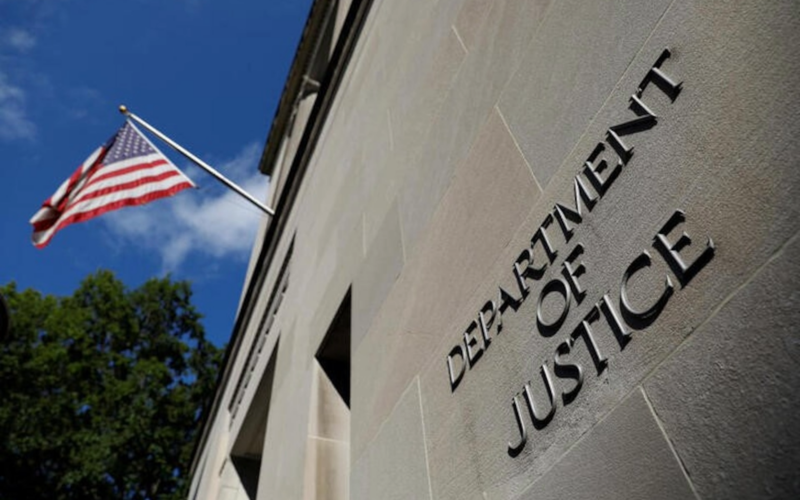
US: Decline in Corporate Crime Changes
The US Justice Department under Donald Trump has significantly reduced the amount it prosecutes corporations for the criminal wrongdoing of their employees. A string of recent cases have seen lenient resolutions or no charges brought against corporations whose employees are involved in wrongdoing. In many cases, the prosecutors have also declined to charge individuals. Former Federal prosecutor Reed Smith told the Wall Street Journal that corporate investigations and prosecutions have been ‘dialled way back’ compared to levels under the former administration. The Attorney-General said ‘companies don’t go to jail, people do,’ but there has been no commensurate increase in the number of prosecutions of individual wrongdoers to make up the gap.
Law reform
Cases of interest and law reform
No Half Measures: Court of Appeal Rejects 'Qualified Relief' in Family Property Estoppel Case: Milan Milenknovic (by his litigation guardian) v Milic Milenkovic [2026] VSCA 151
Milan Milenkovic and his wife Milunka emigrated to Australia in 1971 with their two children Ridunka and Milic. Milic aruged that in 1992, his parents promised to give him a property on Glenlyon Road if he undertook renovations there. Milic personally performed and financed renovations at the property. The Glenlyon property was sold in 2019 for $1.8 million. Shortly after the sale Milic lodged a caveat claiming a proprietary estoppel constructive trust. At trial, the judge found that the 1992 promise was made, that Milic detrimentally relied upon it, that he did indeed have an interest in the property pursuant to a proprietary estoppel constructive trust, and that it would be unconscionable for Milan to resile from the 1992 promise. Milic was therefore entitled to the net proceeds of the sale. These findings were upheld on appeal, with the COA additionally finding that Milic had not consented or acquiesced to his parents’ absolute ownership of the property, and as such a defence of laches could not apply.
The court considered whether it was appropriate to grant Milic the entire proceeds of the 2019 sale of the Glenlyon property, which represented far more than the detriment he suffered, in circumstances where doing so would leave his father (his mother being deceased) with no significant assets besides superannuation to fund his retirement. The court held that there was no need for ‘substantial correspondence’ between the detriment suffered by Milic and the expectation of the 1992 promise; and further, there was no persuasive reason for the judge to grant ‘qualified relief’ in Milan’s favour, given he had dispersed other properties to his children through his life and it would be unfair to single out Milic’s interest to provide for Milan.
No Grounds, No Restraint: Federal Court Frees Up Merhi's Travel Plans: ASIC v Merhi (No 4) [2026] FCA 916
This was an interlocutory application in which Mr Merhi sought to have a travel restriction vacated, or a carve-out applied so that he could make a brief trip to Saudi Arabia and Dubai. Mr Merhi’s proposed orders were opposed by ASIC, but counsel for ASIC was unable to identify any specific basis upon which the travel restraint order was necessary or desirable to protect the interests of an aggrieved person. As such, the prerequisite for the making of a travel restraint order was not satisfied and the order was vacated.
Parliamentary Privilege Trumps Bias Claim: Full Court Shuts Out Hansard Evidence TESA Group Pty Ltd v Mining and Energy Union [2026] FCAFC 86
The application related to regulated labour hire arrangement orders heard before the Fair Work Commission. The applicants, TESA Group Pty Ltd, made an application that the Deputy President be recused from the matter based on her political career, during which she campaigned for equal pay protections that would have been contrary to a finding in the applicants’ favour, thus causing her decisions to be attended by the apprehension of bias. The applicants relied on statements in Hansard which the respondent, the Mining and Energy Union, argued were the subject of Parliamentary Privilege. This appeal sought to deal with the question of whether the excerpts from Hansard were admissible.
Ultimately the court held that the excerpts from Hansard were not admissible. Parliamentary privilege limits the evidence that may be received by a court, applying even where it has the effect that a matter is decided with less than the whole of relevant materials. The exclusion of the Hansard materials significantly undermined the applicants’ case for judicial review, since their allegations of bias rested in large part on the Deputy President’s past remarks in Parliament.
$42 Million Question Stands: Federal Court Refuses to Block Liquidator's Examination Diakou v Yeo (liquidator), in the matter of ACN 152 259 839 Pty Ltd (in liquidation) [2026] FCA 896
An appeal by members of the Elzain family, in which they sought to prevent the liquidator of Maxcon Developments from examining $42 million in payments allegedly made shortly before the company’s collapse, has been refused by the Federal Court. The applicants failed to comply with case management orders and sought a last-minute requests to adjourn proceedings. Justice Beach said the applicants had been given a reasonable opportunity to present their case but had failed to prosecute their own application. They failed to identify any specific reputational or procedural harm that would outweigh the potential benefits of examining the alleged transfers. The application to appeal was refused with costs.
Anonymous Fraudster, Frozen Funds: UK Court Grants Global Freezing Order in $4.3M Crypto Scam Stephen Wilden v Person Unknown & Anor [2026] EWHC 1355 (KB)
Stephen Wilden, a German national, was the victim of a sophisticated cryptocurrency fraud. Over a period of two months the claimant was enticed by a fraudster using the alias Brian Smith to make transfers totalling approx. EUR €2.6 million (approx. AUD $4.3 million) into a crypto wallet hosted by scam crypto management platform ‘Ledgerlock.’ Forensic tracing identified that 100% of the misappropriated funds had been routed to wallets hosted on the HTX exchange, operated by Huboi Global S.A. (a company incorporated in Panama).
These proceedings related to a global freezing order against the unknown individual who perpetrated the scam. Even though Smith’s identity is unknown, nonetheless the freezing order could be effected on the crypto wallets which forensic tracing identified as being in this control. The claimant also sought a disclosure order out-of-jurisdiction against Huboi Global S.A. alleging they had knowledge of the identity of the perpetrator. Both injunctions were granted.
The firm
Duxton Hill out and about
Two New Additions to the Duxton Hill Team
Duxton Hill has welcomed two new lawyers, Anthony Gagliardi (left) and Jordan Hertz (right). Anthony graduated with a Juris Doctor from the University of Melbourne in 2023 and was admitted to practice as a lawyer in Victoria in 2025. He has a previous experience investigating fraud and recovering fraud assets on behalf of a Victorian Statutory Authority client. Anthony looks forward to assisting clients in complex fraud and professional misconduct matters.
Jordan graduated with a Bachelor of Laws (Hons) from Monash University in 2024 and was admitted to practice this month. At Duxton Hill, Jordan looks forward to contributing to complex fraud and asset recovery matters.